
Cloverleaf Previous Residents by Era
Earlier occupants leave different records in different periods. The reliable Cloverleaf trail joins a parcel identifier to a dated record rather than treating any one search result as complete. HCAD gives the present appraisal and address anchors. The Harris County Clerk then supplies the recorded-document path. Directories, newspaper material, federal census schedules, and archival reels add the household layer that deeds cannot provide. Cloverleaf is unincorporated, so a Houston mailing label is not a reason to switch to a city office. Start with the source that fits the period, and preserve the legal description when the street label changes.
| Source | Years It Covers | Where Held | What It Shows |
|---|---|---|---|
| Harris County Clerk electronic real-property index | Index from January 1961; images from November 1, 1960 | Online Clerk portal | Deed parties, recording date, instrument, legal description, and images subject to login rules |
| Clerk books, microfilm, and archive | 1836 through the late 1950s, exact series varies | Todd Street, Clerk, and archive routes | Older deeds, plats, probate, marriage, vital, and court material |
| TSLAC Harris County deed reels | 1837–1886 guide coverage | Texas State Library and Archives Commission and selected FamilySearch access | Historical deed indexes and records by reel and year |
| HPL Houston directories | Nineteenth century–1986; digitized 1866–1924; partial 1925–1959 | Clayton Library, HPL databases, and HeritageQuest | Address, occupant, spouse, phone, business, and residence notation |
| Federal census | Public through 1950 | NARA, FamilySearch, Ancestry, and library access | Household relationships, ages, birthplaces, and enumeration geography |
Use the Clerk portal for a post-1960 instrument, the historical repositories for an earlier title gap, and directories or census schedules for the people who occupied an address. Permit and code records are a possible address/date lead, but no verified Cloverleaf public search interface or year range was found. Request an existing file by address, legal description, and date from the correct county or municipal custodian after confirming jurisdiction.
Note: A dated household entry and a deed answer different questions, so retain both instead of treating one as proof of the other.
Cloverleaf Past Residents and Parcel Anchors
Before tracing earlier occupants, save the modern anchor fields from Harris County Appraisal District: account number, situs address, owner display, mailing address, subdivision, lot or block, legal description, and map location. HCAD is an appraisal source, not the deed recorder. Its owner field can lag a transfer or differ from the recorded instrument. The situs field identifies the physical parcel; the mailing address shows where notices go and may be outside Cloverleaf. Compare them, but do not treat either field alone as a full household list.
HCAD public property data is the source shown for this parcel-based starting point.
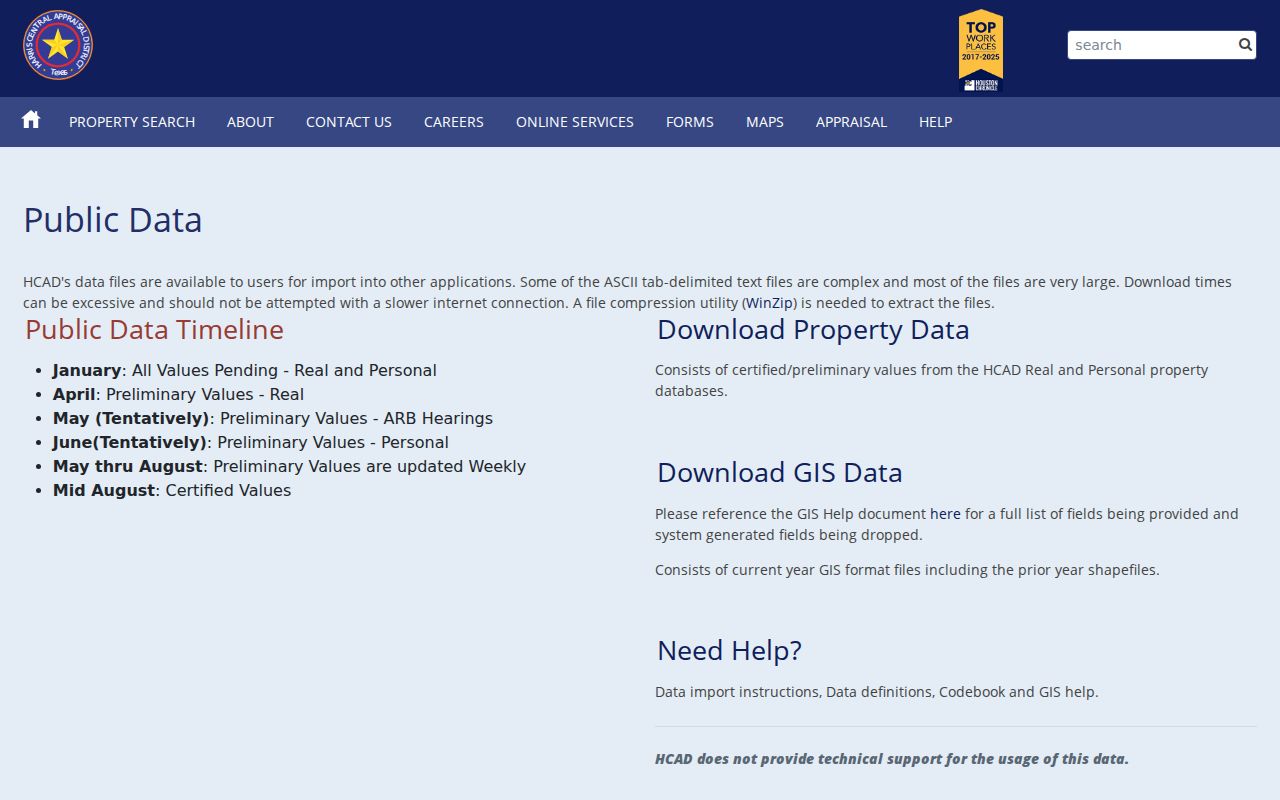
HCAD permits searches by account, address, and owner name. Street forms can differ, unknown or vacant records can use a zero address, and missing geometry can reflect a pre-mapping account or a correction issue. The legal description and account number are the stable bridge to Clerk records when an old street name does not return a useful result.
Tracing Cloverleaf Former Residents in Deeds
The Harris County deed chain answers an ownership question, then provides names and dates for the household research. Search the current owner as a grantee in the Harris County Clerk Real Property Search, use the legal description as a second filter, and read the purchase image when available. The seller named in that instrument becomes the next earlier acquisition search. A deed of trust, release, assignment, probate instrument, divorce decree, lien, restriction amendment, or plat can explain a change when a straightforward sale deed is not obvious.
- Record the HCAD account, situs address, subdivision, lot or block, legal description, and current owner display.
- Search the current owner as grantee and use the legal description or subdivision fields to separate the target parcel from similar names.
- Open the purchase deed image when access permits, then record its file number, film code, recording date, instrument type, seller, and any prior-title reference.
- Search that seller as an earlier grantee to locate the prior acquisition, then repeat the sequence back through the chain.
- When the trail crosses the online cutoff, take the file, legal-description, and year notes to the books, microfilm, archive, or reel route.
The portal result is a locator. Record its file number, film code, and recording date before opening an image or requesting a copy.
| Party names | Grantor, grantee, trustee, and role variants, indexed last name first. |
|---|---|
| Record placement | File number, film code, recording date, instrument type, volume or page, and legal-description fields. |
| Substance | Instrument category and legal-description text. Full terms require the image or a copy. |
| Image route | Images may be available after a free login; unavailable images and raised-seal copies use the office copy route. |
These fields identify a recorded item, while the document image supplies the complete terms and any prior-reference language.
- Grantor / grantee
- The grantor transfers an interest. The grantee receives it. In a purchase deed, the seller is commonly grantor and the buyer grantee.
- Chain of title
- A dated sequence of recorded instruments that connects the target parcel through successive transfers and related filings.
- Legal description
- The subdivision, lot, block, unit, abstract, outlot, or tract wording that identifies land when a street address changes or is absent.
- Criss-cross directory
- A street-ordered directory section used to find historical occupants by address rather than by surname.
Cloverleaf Former Residents Before 1961
The Clerk’s electronic real-property index begins in January 1961, and images are available from November 1, 1960. That cutoff is a local records story, not a dead end. The County Clerk’s book-form records extend from 1836 through the late 1950s, and the 1955–1960 transition may specifically require physical or microfilm research. The Clerk says its online database is not the official repository, and some material requires a free account or an office copy route. A blank result therefore needs a custody check before it becomes a negative finding.
For the older Cloverleaf trail, use the Todd Street historical warehouse, Harris County Archives, Texas State Library and Archives Commission reels, and selected FamilySearch images. The state guide includes Harris County deeds from 1837–1886, along with probate, naturalization, map, plat, survey, and court series. Ask for the record series, year, and reel or film detail rather than repeating a broad name search.
Note: The online index’s coverage date applies to recorded-property searching, not to every county record series or every image.
Cloverleaf Former Residents in Archives
The Texas State Library and Archives Commission Harris County guide provides a documented route for older local records. It describes deed, probate, court, naturalization, survey, and map material and helps identify the reel or series before a request. Harris County Archives is another route for county-office and private collections, with appointment research and holdings that include maps, photos, scrapbooks, oral histories, bound volumes, and microfilm. Some collections are on-site, restricted, or not fully indexed online, so access conditions should be checked before a visit.
The TSLAC county guide is the source for the historic-reel route shown here.
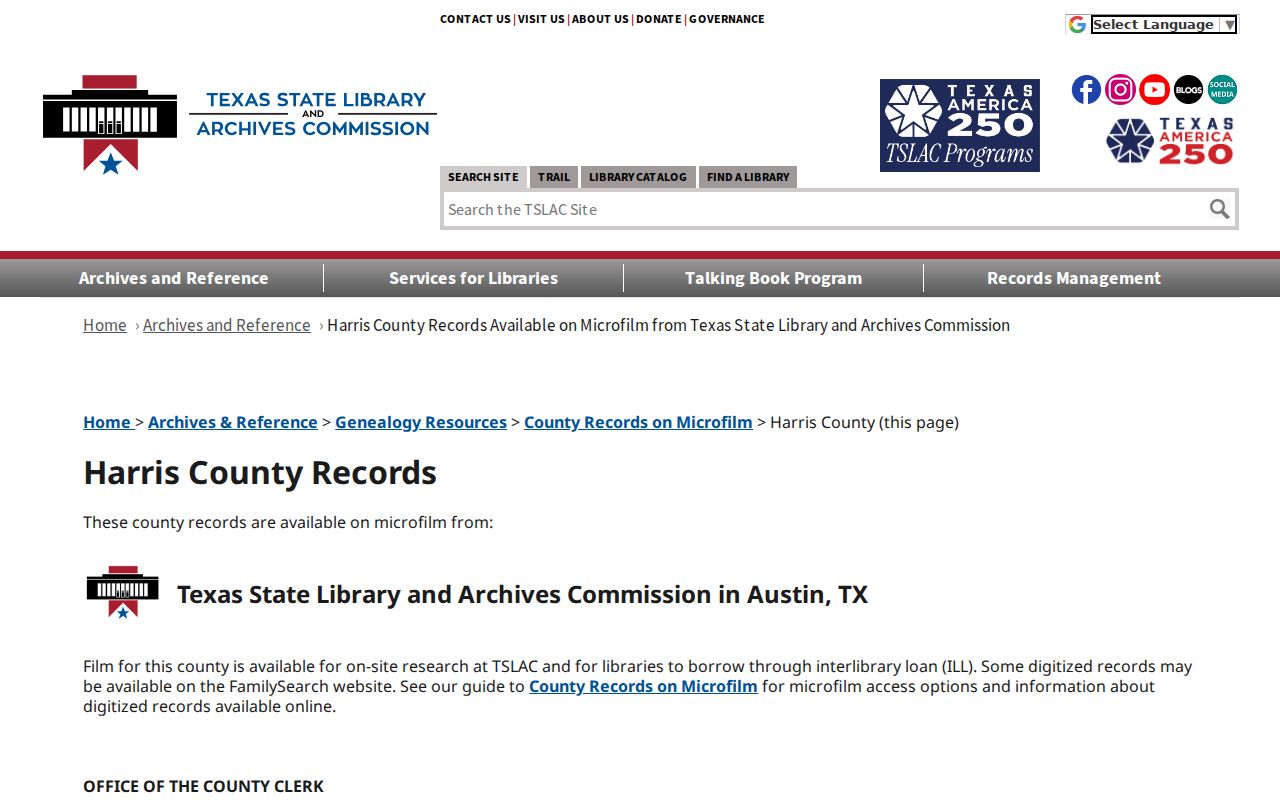
FamilySearch adds catalog searching by place, keywords, title, author, subject, surname, call number, film or image group number. Its camera and search icons indicate whether material is digitized or indexed, but contracts and privacy limits can restrict images. Preserve the reel or catalog detail even when a name is not visible online.
Cloverleaf Former Residents in Directories
Ownership is only one part of who lived at an address. Dated city and criss-cross directories can place an occupant, spouse notation, phone, business connection, or h/r mark at a printed street address. The 1940–41 Tri-Cities and La Porte scan is a regional example with both alphabetical and street sections. For the full collection detail and how its entries read, use the Cloverleaf city directory collections. A directory entry can describe a roomer, spouse, or contact rather than the parcel owner, so it needs a year and a second source.
- Choose directory years around a known construction, move, sale, or family event, then search the exact street plus spelling and post-office variants.
- Record the title, year, page, printed address, household notation, spouse name, phone, and the alphabetic or street-section heading.
- Pair the nearest public federal census with that directory year. The public census reaches 1950, and the modern CDP label may not appear in older enumeration geography.
- Compare relationships, ages, birthplaces, children, occupation, street order, and nearby-community wording before treating the household as the same one.
- Search the next directory year and a dated notice or record for the same family to explain a move, absence, or change in name form.
This pairing works because directories supply intermediate years and census schedules add household structure. A missing directory entry is not proof of vacancy or a move. Publisher coverage, street changes, OCR errors, and a different regional heading can all produce a gap.
Note: Compare the directory’s printed geography with census enumeration context before assigning a historical household to the modern CDP.
Cloverleaf Addresses That Change Names
No official Cloverleaf-specific street-renumbering or renaming year was located. Do not invent one to bridge a gap. Instead, compare the modern HCAD situs field, Clerk legal description, subdivision plat, historical street page, USPS delivery form, old newspaper wording, and census enumeration map. A street may appear with an abbreviation, an old number, a railroad-community label, or a post-office town. Keep the historical form beside the modern search term in research notes.
The legal description is usually the best bridge. Subdivision, lot, block, unit, abstract, outlot, or tract fields can link a deed or plat to a parcel when the address does not appear in the index. The HCAD account is an administrative parcel key, not a deed book or page reference. Use it to reach the legal description, then use the legal description to search Clerk instruments.
Note: Retain both an old street form and the modern situs form to make the address trail testable later.
Cloverleaf Former Residents at Endpoints
Obituaries, funeral records, probate, and later deeds can close a past-resident trail. HPL offers Chronicle coverage from 1901–2017, Houston Post coverage from 1880–1995, and Fogle-West funeral material from 1950–1965. Search a last known directory address and surname around likely event dates, then preserve the issue date and page. An obituary can identify relatives or a funeral provider, but it does not establish legal domicile by itself.
Harris County probate and heirship files may identify heirs, attorneys, and mailing addresses. Online coverage varies, and older material can be in the office or on microfilm. A later deed seller, estate filing, or recorded probate instrument can explain why the name at an address changes. Do not copy restricted personal information from a record image.
Harris County Clerk contact and records routes identify the office and counter channels for unavailable material.
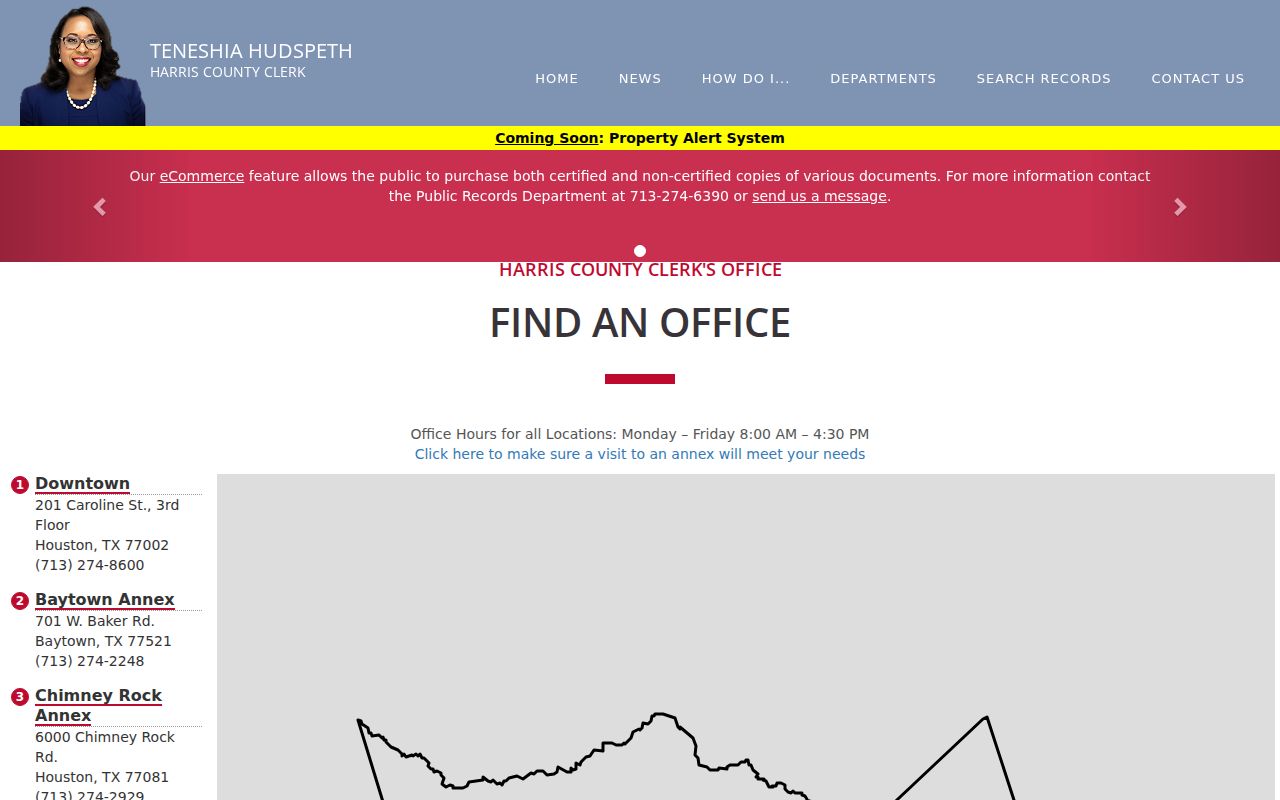
The counter, historical warehouse, archive, and written Texas Public Information Act request are separate options. A precise request asks for an existing record series and identifies the address, legal description, date range, or file reference. It does not require an office to create a new history or answer a broad question.
Cloverleaf Previous-Resident Use Limits
Past-address research fits family history, estate and heir questions, neighborhood history, and personal curiosity. It should stay anchored to the records and dates needed for that purpose. Texas law protects some data, and record images may carry redactions. A substitute address used through the Texas Address Confidentiality Program is not a route to a person’s actual residence. The lack of a directory entry or a protected field does not justify seeking information from private sources.
Lawful use. Use Cloverleaf house-history and family-history records responsibly. Texas Penal Code §§42.07 and 42.072 address harassment and stalking; never use a past address or record trail to harass, threaten, monitor, or harm a living person.